
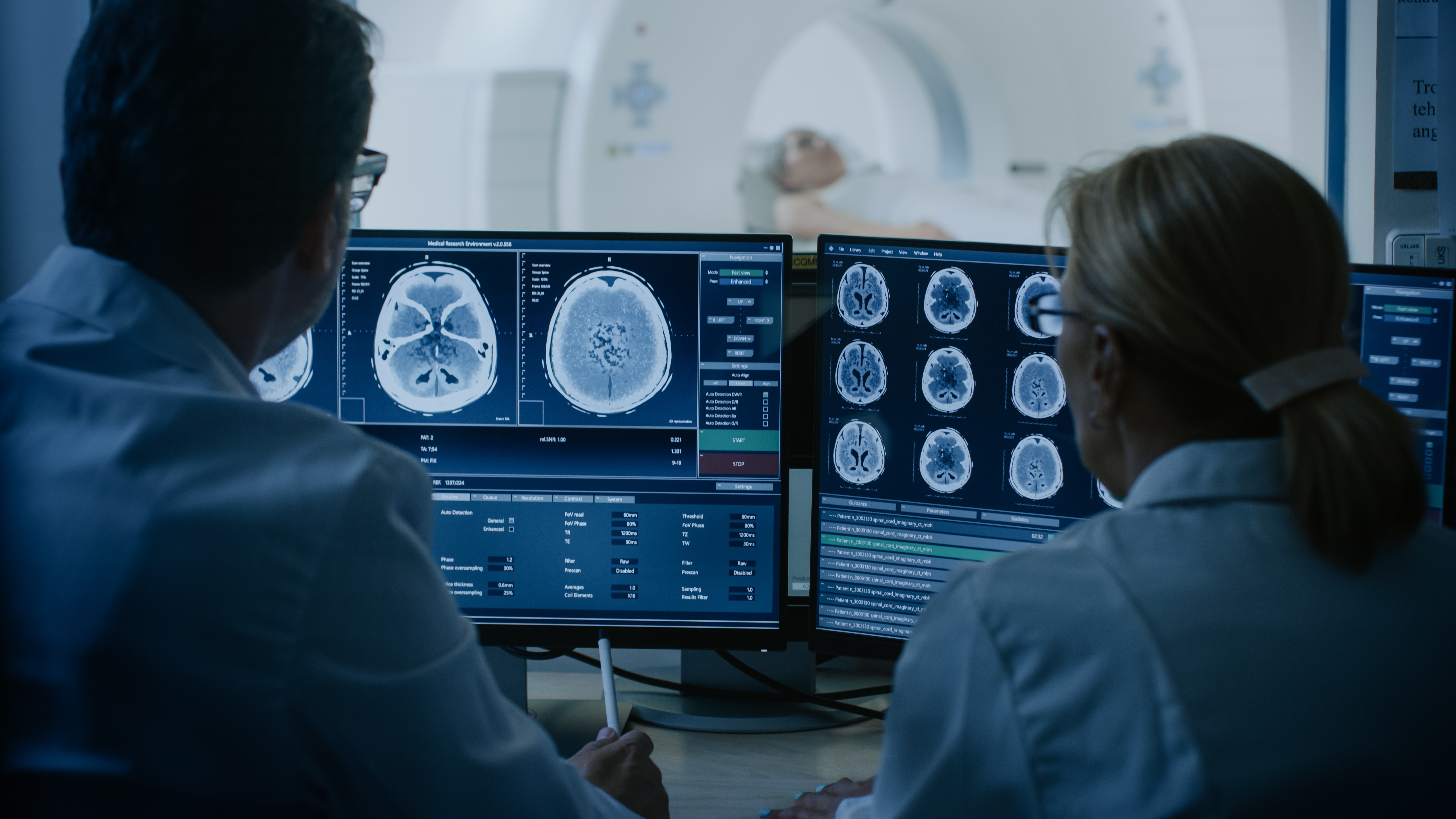
1. Detect nodules or abnormalities in lung CT scans to diagnose early signs of lung cancer with pre-trained CNN model like ResNet or VGG.
2. Segment brain tumors from CT scans to identify the affected regions with U-Net.
3. Automatically detect COVID-19 pneumonia from chest CT images with EfficientNet or InceptionV3.
1. Predict molecular properties such as solubility, toxicity, or binding affinity with a SMILES string
AuroraGPT: With one trillion parameters, AuroraGPT (also referred to as "ScienceGPT") is expected to assist researchers in fields like biology, climate science, and cancer research by streamlining data analysis and providing insights through a chatbot interface.
1. The ChatGPT-o1 may leverage reinforcement learning to enhance its ability for logical reasoning.
2. Reinforcement learning demonstrates outstanding performance in managing dynamic treatment plans for chronic diseases and critical care.
3. Reinforcement learning is applied in automated medical diagnosis by utilizing both unstructured and structured clinical data.

More than 3000 drug synthetic routes.
Over 1000 drug-target interactions.
Over 20,000 annotated CT images for cancer detection.
With a global network of medical professionals, our labeling teams provide expertise in medical data annotation, crafting high-quality, unbiased, and representative training data to fuel accurate and reliable AI models, ensuring timely and accurate labeling of extensive data sets to support innovative AI initiatives.
We prioritize data security and confidentiality, adhering to strict industry protocols for medical data labeling. Our tailored services address your immediate needs while providing flexibility to adapt and grow, ensuring a seamless transition to future challenges and opportunities.

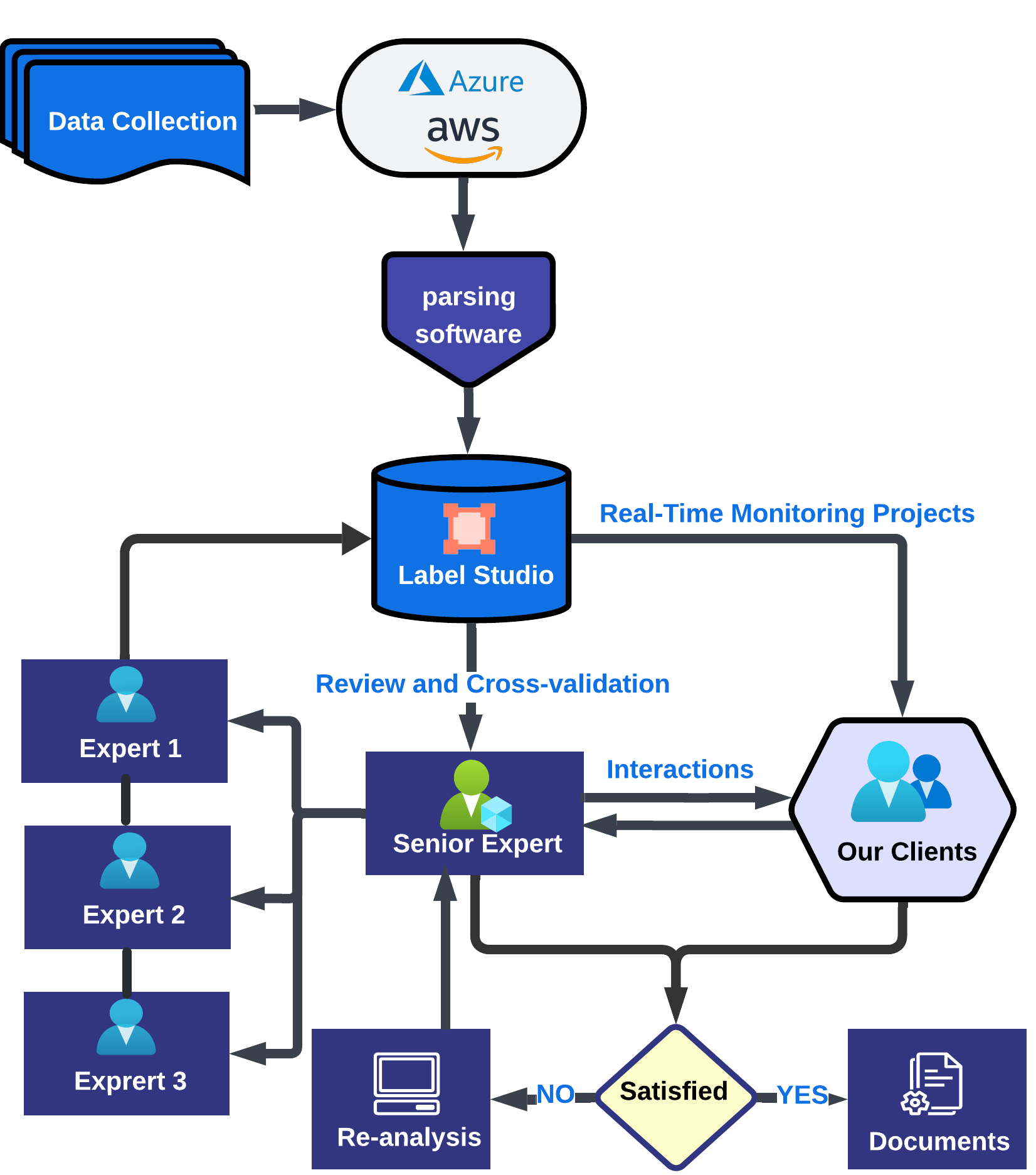
AWS and Azure offer scalable, secure, and globally distributed data storage solutions, making them ideal for handling large datasets.
Label Studio offers a flexible, open-source platform with support for various data types and customizable workflows, making it ideal for efficient and scalable data annotation tasks.
Using three label experts ensures greater accuracy and consensus in annotating complex medical data and images, reducing bias and improving the reliability of the results for critical healthcare applications.
Real-time monitoring in data labeling ensures timely feedback and quality control, enabling rapid identification and correction of errors.